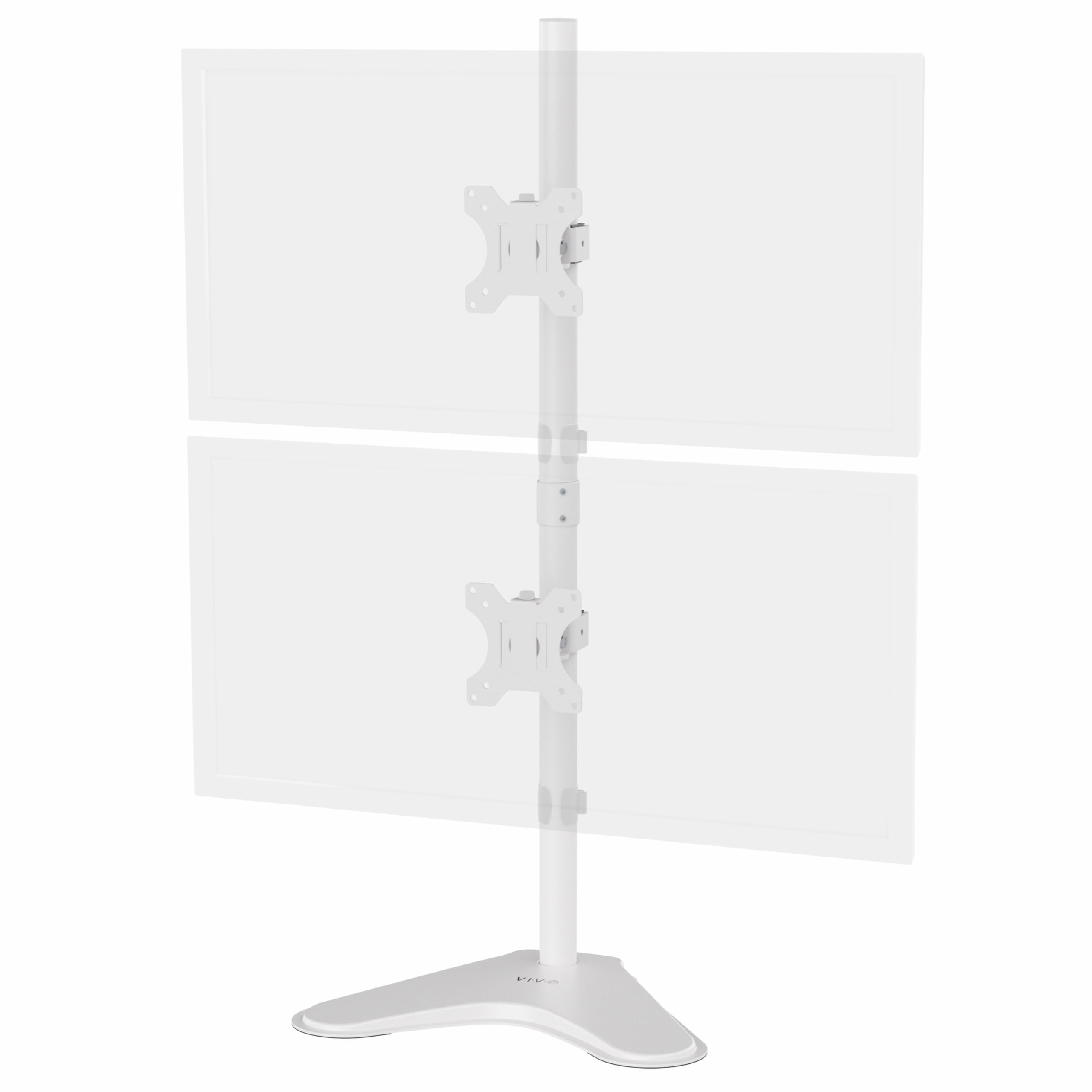
The VIVO Dual Monitor Desk Stand is a freestanding option for placing two compatible monitors one above the other, with support for screens up to 34 inches and 22 pounds each.
This vivo dual monitor stand review looks at its range of positioning, desk footprint, and the compatibility checks that matter before buying.
VIVO Dual Stand Review Summary
The quick verdict
3,000+ ratings
Read Amazon ReviewsVIVO Dual Monitor Desk Stand
A freestanding stacked mount for buyers pairing two VESA-compatible screens, including ultrawides, while keeping desk space open.
- Supports two monitors, each 13 to 34 inches and up to 22 pounds.
- Accepts 75 × 75 mm or 100 × 100 mm VESA mounting patterns.
- Freestanding tabletop design with a 15.4 × 12.4-inch base and padded underside.
- Adjustable brackets provide +45° to −45° tilt, 180° swivel, and 360° rotation.

Pros
- Supports two ultrawide screens up to 34 inches, within the stated per-screen weight limit.
- A vertical arrangement can free desk space directly beneath the displays.
Consider before buying
- The 15.4 × 12.4-inch base needs a clear, stable patch of desk.
- The stacked arrangement may not suit buyers who want monitors side by side at the same height.
Read the full review summary
This stand is built around a simple space-saving arrangement: two displays share a center pole in a vertical stack, while a broad base rests on the desk.
Its brackets allow tilt, swivel, rotation, and height adjustment, so buyers can align both screens to suit a fixed dual-display workflow.
It is a good fit for users who want a freestanding mount and have monitors with standard 75 × 75 mm or 100 × 100 mm VESA holes.
The 34-inch and 22-pound-per-screen limits make compatibility checking especially important for larger displays; the base also occupies desk surface, so measure the available area before choosing it.
The buying factors
VIVO Dual Stand Scorecard
Editorial scores reflect listed features and buyer fit; they are not laboratory measurements or customer ratings.
Monitor compatibility
The mount supports a useful 13-to-34-inch range and up to 22 pounds per screen, with two common VESA patterns.
Positioning flexibility
Tilt, swivel, full rotation, and height adjustment along the pole give buyers several ways to set screen orientation and alignment.
Desk-space efficiency
Stacking screens vertically clears space beneath them, though the freestanding base itself takes up a 15.4 × 12.4-inch area.
Freestanding convenience
The tabletop base avoids relying on a desk-edge clamp, which may suit workspaces where a freestanding mount is preferred.
Cable tidiness
Integrated cable management helps organize cords along the mount.
Setup practicality
Removable VESA plates, included hardware, and assembly instructions are intended to simplify installation.
Key Features and Specifications of VIVO Dual Stand
- Supports two monitors, each 13 to 34 inches and up to 22 pounds.
- Accepts 75 × 75 mm or 100 × 100 mm VESA mounting patterns.
- Freestanding tabletop design with a 15.4 × 12.4-inch base and padded underside.
- Adjustable brackets provide +45° to −45° tilt, 180° swivel, and 360° rotation.
- Height adjusts along the center pole; screens can be positioned in portrait or landscape orientation.
- Integrated cable management, removable VESA plates, assembly hardware, and instructions are included.
- Steel, aluminum, and plastic construction; backed by a three-year warranty.
Pros and Cons of VIVO Dual Stand
Pros
- Supports two ultrawide screens up to 34 inches, within the stated per-screen weight limit.
- A vertical arrangement can free desk space directly beneath the displays.
- Multiple adjustment directions accommodate different viewing angles and portrait or landscape use.
- The padded base helps protect the desk surface from scratches.
- Removable VESA plates and included assembly materials make the setup process more manageable.
Consider before buying
- The 15.4 × 12.4-inch base needs a clear, stable patch of desk.
- The stacked arrangement may not suit buyers who want monitors side by side at the same height.
- Buyers with screens near the size or weight limits should confirm each monitor's dimensions, weight, and VESA pattern before ordering.
Who Should Buy VIVO Dual Stand?
Good fit
Consider the VIVO Dual Monitor Desk Stand if you want two monitors arranged vertically and prefer a freestanding base on the desktop.
Its broad size range, per-screen weight allowance, and common VESA compatibility make it relevant to mixed office and study setups, including compatible ultrawide displays.
The adjustment range is useful when you need to tilt or rotate the screens after installation, while height adjustment along the pole helps establish the stack's overall position.
Before buying, check that both displays fall within the supported size and weight limits, verify their VESA hole pattern, and reserve enough desk area for the base.
The three-year warranty adds a defined coverage period, and the cable management system can help keep the setup visually organized.
If those details align with your desk and monitor arrangement, this stand is a practical candidate for a two-screen vertical workspace.
Who should skip it
Skip this design if you need two screens side by side at equal height or want each monitor positioned independently on an articulated arm; the described layout centers both displays on one pole in a vertical stack.
Look elsewhere if either display exceeds 34 inches or 22 pounds, lacks a compatible VESA pattern, or if your desk cannot spare the base's stated footprint.
How the VIVO Dual Stand Fits a Stacked Desk Setup
Vertical layout and desk planning
The stand's main spatial benefit comes from placing one screen above the other rather than spreading both across the desk.
That can leave more room for a keyboard, notes, or other work items below the screens, but the base still uses a defined area of the desktop.
Measure the proposed location and consider how high the upper display will sit in your intended arrangement.
Check the display fit first
Screen size alone is not enough to determine compatibility. Each monitor needs to be within the 13-to-34-inch range, weigh no more than 22 pounds, and have 75 × 75 mm or 100 × 100 mm mounting holes.
Check the monitor's specifications and the rear mounting area, particularly if the display is near the maximum size or weight.
Adjustments for mixed tasks
Tilt, swivel, and 360-degree rotation let users change viewing angles and orientation, while height adjustment along the pole sets the vertical position.
Portrait mode can be useful for tall documents or code, while landscape remains familiar for general work. Since both displays share a center pole, plan the order and spacing of the screens before tightening the setup.
Freestanding base and cable routing
A desk-standing base avoids requiring a clamp at the desk edge, which may be a practical distinction for some layouts.
Its padded underside is intended to protect the desktop, and integrated cable management provides a route for organizing monitor cords.
Keep the base on a stable, level surface and leave room for cables to reach their connections without being pulled tight.
Alternatives to VIVO Dual Stand
Computer Monitor Arms alternative
60,000+ ratings
Read Amazon ReviewsVIVO Dual Ultrawide Monitor Desk Mount
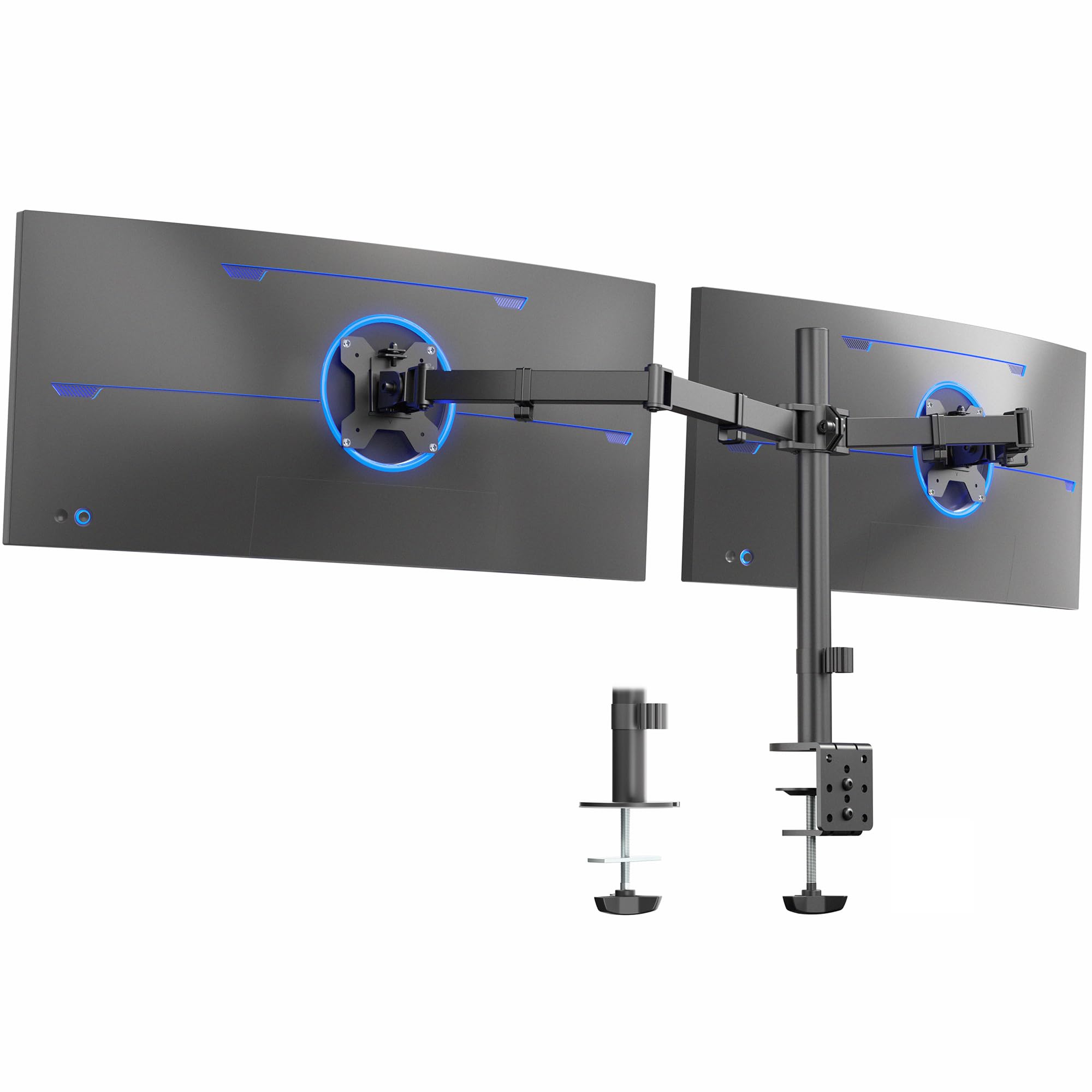
Choose this alternative if your compatible ultrawide screens exceed 34 inches but remain within its 38-inch limit, or if you specifically want a desk-mounted clamp or grommet arrangement.
The reviewed stand is the better fit when you want its freestanding base and your screens fit within 34 inches.
- This VIVO mount supports two screens up to 38 inches and 22 pounds each, with a C-clamp or grommet mounting option and adjustable brackets.
- The VIVO Dual Monitor Desk Stand supports a vertical stack of two screens up to 34 inches and 22 pounds each on a freestanding base.
Computer Monitor Arms alternative
34,000+ ratings
Read Amazon ReviewsHUANUO FlowLift Dual Monitor Stand
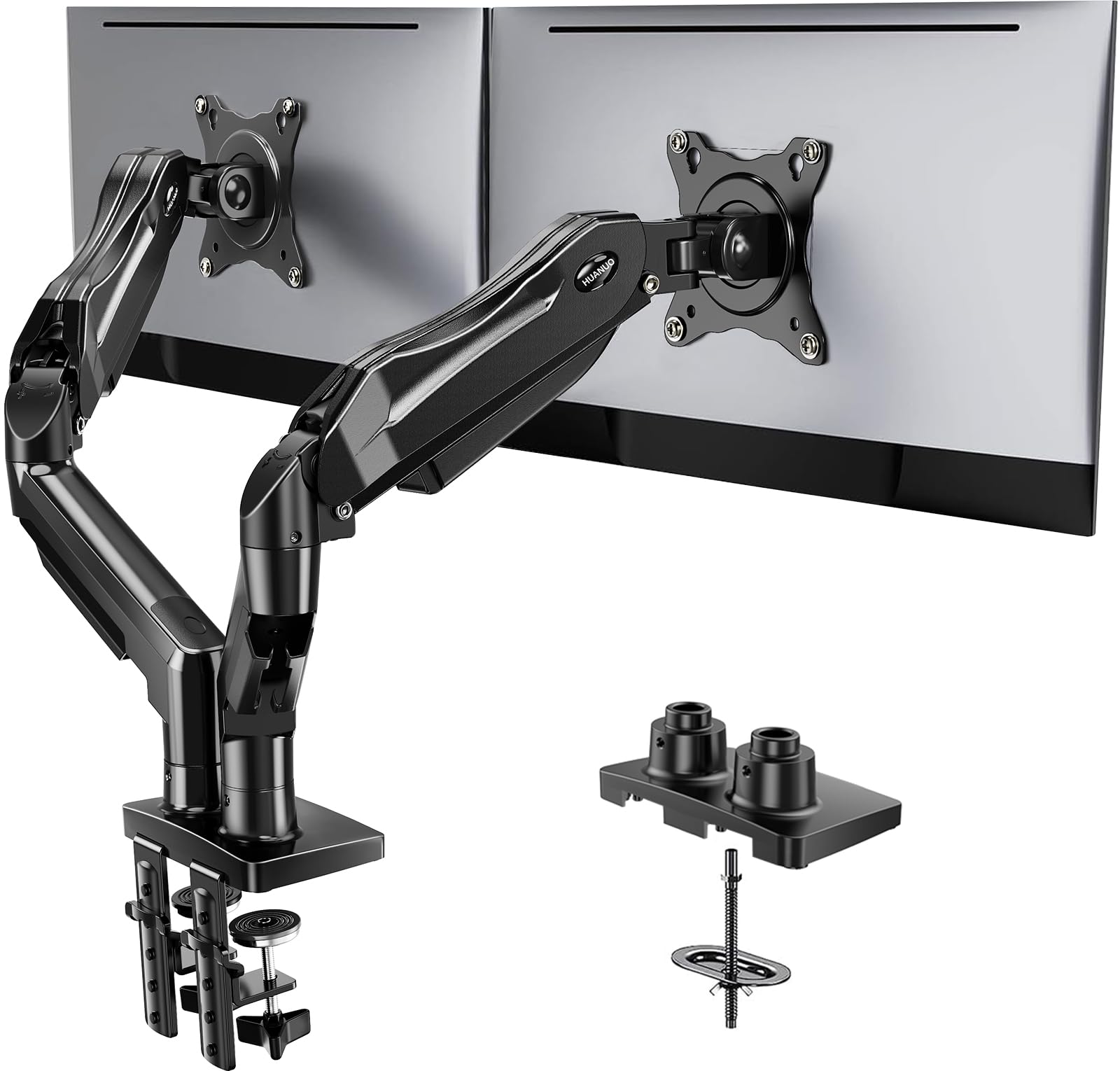
Consider the HUANUO if you want a desk-attached dual-arm setup for screens no larger than 32 inches and value its stated clamp or grommet mounting options.
The VIVO is the closer match for buyers seeking a freestanding stacked mount or compatibility with screens above 32 inches but within its own limits.
- This dual mount supports 13-to-32-inch screens weighing 4.4 to 19.8 pounds each and attaches with a C-clamp or grommet base; its arms offer full-motion adjustment.
- The VIVO uses a vertical freestanding design and supports screens up to 34 inches, with height adjustment along a shared center pole.
Is VIVO Dual Stand Worth It?
The VIVO Dual Monitor Desk Stand is worth considering when a vertical two-screen layout, freestanding base, and broad monitor compatibility match your workspace.
Its adjustment range and cable management make the setup adaptable, while its stated limits give buyers clear fit checks.
Confirm each screen's VESA pattern, size, and weight, and measure for the base before buying. If you want a stacked arrangement and both monitors fit, this is a sensible stand to shortlist.
Your review at a glance
3,000+ ratings
Read Amazon ReviewsVIVO Dual Monitor Desk Stand
A freestanding stacked mount for buyers pairing two VESA-compatible screens, including ultrawides, while keeping desk space open.
- Supports two monitors, each 13 to 34 inches and up to 22 pounds.
- Accepts 75 × 75 mm or 100 × 100 mm VESA mounting patterns.
- Freestanding tabletop design with a 15.4 × 12.4-inch base and padded underside.
- Adjustable brackets provide +45° to −45° tilt, 180° swivel, and 360° rotation.